Showing posts with label Everyday Exotic Spices. Show all posts

Wednesday, April 29, 2026

Spice Spotlight: Cinnamon

I can smell nutmeg, apples, and cinnamon.

I can sprinkle a little powdered pumpkin spice or a dash of plain old cinnamon in my morning cup of coffee.

For an evening meal, I can enjoy a hearty bowl of butternut squash soup or cook up a stew chock-full of root vegetables and meat, made with that special secret ingredient:  cinnamon.


In the United States, people associate cinnamon with the autumn season and/or the Christmas holidays.  But for me, any time is a good time to enjoy cinnamon.
😍  

Shining the spotlight on one of my favorite warming, feel-good spices.  Cinnamon!

DID YOU KNOW?

Cinnamon used to be more valuable than gold.

"The woody, warming spice we sprinkle with abandon on top of baked goods and specialty coffees is native to Sri Lanka, Myanmar, and India. But very few people knew where cinnamon came from when merchants first began selling spices throughout Europe, Asia, and Africa as far back as 3,000 years ago — and spice traders capitalized on that lack of knowledge to charge high prices. The stories they told sound wild now, but they once made cinnamon more precious than gold. ..."


http://amzn.to/2gi4rq4
DID YOU KNOW?

- There is a mythological creature called the Cinnamon Bird?
- In Ancient Egypt, cinnamon was used in the embalming process?

There's probably lots of other things you didn't know about cinnamon as well.

If you're curious, read more:  20 Facts about Cinnamon.

Links to a sampling of recipes using cinnamon that reflect world cuisine and global tastes:

Soft, chewy sugar cookies rolled in cinnamon sugar, snickerdoodles are a cozy American classic with a signature tang from cream of tartar. Their warm spice and crackly tops make them a nostalgic favorite across generations.

Silky pumpkin soup often features cinnamon to enhance its natural sweetness, creating a comforting bowl enjoyed from North America to the Middle East. The spice adds depth and warmth, especially in autumn-inspired versions.

A hallmark of American baking, apple pie relies on cinnamon to bring out the fruit’s brightness and aroma. The spice blends with apples to create a filling that’s both sweet and warmly spiced.

Cinnamon is the star of many coffee cakes, swirled through the batter or layered as a crumbly streusel. This beloved treat appears in variations around the world, often served with tea or coffee.

In Middle Eastern and Mediterranean cuisines, baklava layers crisp phyllo with nuts scented with cinnamon, then soaks everything in fragrant syrup. The spice adds warmth that balances the dessert’s sweetness.

A celebrated South Asian rice dish, biriyani uses cinnamon sticks as part of its aromatic spice blend, infusing the rice and meat with deep, layered flavor. The result is a fragrant, festive centerpiece.

In Mexican mole sauces, cinnamon contributes subtle warmth that complements chiles, chocolate, and nuts. Its presence helps create Mole’s famously complex, bittersweet depth.

Cinnamon often appears in Chinese and Southeast Asian roast duck marinades or spice rubs, adding gentle sweetness that enhances the rich, fatty meat. The spice helps create a beautifully aromatic, lacquered finish.


Kunafeh, the Middle East's Favorite Cheese Delight!


https://www.tumblr.com/myfoodieluv/792542919952302080/dolce-rita-kunafeh-the-middle-easts-favorite

Chinese Cinnamon Beef Noodle Soup Recipe - Chinese.Food.com

Chinese Cinnamon Beef Noodle Soup Recipe - Chinese.Food.com

This was published in a Fine Cooking magazine a couple of years ago. I was so excited to have found a relatively easy yet very flavorful noodle soup for my family. My husband (the ultimate food critic) loves this and doesnt mind eating it for days.


Tomato Bredie - Traditional South African Stew (Video) | PantsDownApronsOn (One stick of cinnamon required.)


https://www.tumblr.com/myfoodieluv/792543963461697536/tomato-bredie-traditional-south-african-stew


Featured Products from SpiceCubed.


Monday, March 30, 2026

Cheesecake: A Slice of Heaven, Joy, and Pure Delight

Cheesecake heaven ... delight ... joy ... dressed up or plain.  No matter. It's the best dessert on the planet!!  Happy for any excuse to enjoy a piece of cheesecake! 😊

Gourmet Cheesecake is the ultimate dessert gift for the ultimate dessert lover. There are many wonderful sites where you can purchase these fabulous gourmet food gifts online.
From classic New York Style cheesecake to Chocolate Mousse Cheesecake. Tough decision, huh? I know!  It's hard to decide if you want to be generous and buy it as a gift OR get it for yourself and eat it all? πŸ˜Š

Hark!  Is that the voice of a diva?

What's that?  You're a domestic diva, and you prefer to make your own cheesecake instead of buying a gourmet gift online?  OK!  The listing of recipes below is for the Martha Stewart look-alikes. 


July 30th is the official date set aside for National Cheesecake Day.  But for me, it's an occasion to extend throughout the entire year. 

EES shares recipes, cooking tips and all things foodie!

Everyday Exotic Spices


Thinking of the winter holidays?
- Easy Eggnog Cheesecake Recipe
- White Christmas Cheesecake

glitter-graphics.com


Monday, March 23, 2026

Spices in Filipino Cuisine by Carlo Villamayor (Guest Post)

It's no secret that Filipino cuisine is one of the best in the world.

Like any good food, Filipino cuisine has to have its secrets. Few people have really mastered authentic Filipino food, not the washed-down fare you get in fast foods and diners, but real, home-made native dishes. Although most of us can whip up something when we need to, it can be hard to capture that distinct Filipino taste.

So what really goes into our food? How do you make your food taste truly Filipino? There's really no single answer because no one can define our food; we come from a hodgepodge of cultures, after all. But one thing that sets us apart from our Asian neighbors is our heavy use of spices. Whereas other cuisines prefer subtle hints of flavor, we like a big burst of it with every bite.

So that's the first rule: be generous with the spice. If you want your dish to fit in with other Filipino recipes, get to know the spices that go into them. Here are some of the most common. 


Ginger

Ginger is used in most Asian cuisine, and Filipino food recipes. In the Philippines, it is most commonly used in soups and stews; dishes such as arroz caldo (rice porridge), and tinola (chicken stew) use garlic as their main spice. It goes particularly well with chicken and fish dishes, where it provides a nice contrast to the strong meat flavors. Ginger is used both for flavor and aroma, although the flesh of the root is not always eaten. Most people just crush the root and drop it into the dish, then take it out just before serving.

Chili

We're not as wild about spicy food as the Thais, but we do like a bit of bite in our food. Virtually every Filipino dish can be spiced up with chili peppers, from rich meat viands to everyday soups and noodles. Sauces like patis (fish sauce) and soy sauce are often mixed with crushed chili and used as dips or marinades. Bicol, a region in southeastern Luzon, is known for using chili peppers in most of its dishes. Perhaps the most popular is Bicol express, made with meat, bagoong (sautΓ©ed shrimp paste), coconut milk, and chopped green chilies.

Garlic and onions

These two almost always go together, especially in meat and vegetable dishes. You may be more familiar with Taiwanese and Australian garlic, which have larger cloves and are easier to work with. But if you want a stronger, spicier flavor, go for native garlic. Philippine garlic comes in smaller bulbs, with cloves less than half the size of other types. This makes them hard to handle, but it's well worth the trouble.

Philippine onions are strong and pungent, making them a great source of flavor. Use native red onions for saut'ing and pickling, but use the white ones for salads and sandwiches. If you're making rice porridge, top it with chopped green onions for extra spice.

Lemongrass

Lemongrass has strong-smelling leaves and stalks commonly used in soups, teas, and sauces. The leaf is slightly sweet with a hint of citrus, a perfect complement to gravy and other meat sauces. There are several ways to use lemongrass, but the most common method is cooking the fresh leaves (sometimes the entire stalk or bulb) with the food to release the flavor. If you're using the stalk, take only the soft inner part and chop it up before dropping it in. You can also use dried and powdered lemongrass, especially if you're in the city and fresh leaves are hard to find. 


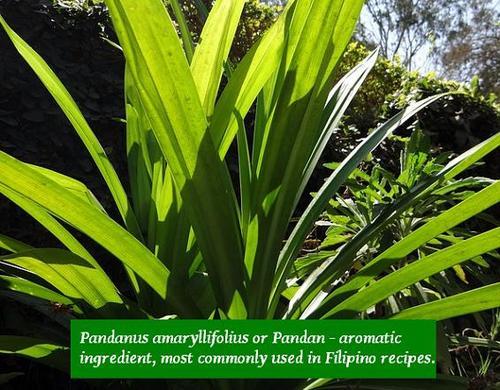
Pandan

Pandan is mostly an aromatic ingredient, most commonly used with plain white rice. Just add a couple of leaves to your rice as it boils, and it comes out with a strong, inviting aroma. Some regions even weave it onto rice pots for an even stronger scent. You can do the same with rice cakes, puddings, and other Filipino dessert recipes.

Bay leaf

The strong, pungent taste of bay leaves makes them a perfect fit for Filipino cooking recipes. The leaf has a wide range of uses, from meat sauces and dips to main dishes like adobo, menudo, and mechado. Dried bay leaves are traditionally used; fresh bay is seldom available in local markets. The leaf itself is not usually eaten; like ginger, you can take out the leaves once you're ready to serve. However, most people just leave them in and set them aside when eating.


About The Author:  
Carlo Villamayor is a devoted cook; he makes it his personal mission to spread the joy of one of his Filipino food recipes with food lovers the world over. Bon appetit!  (Sources:  ArticleCity.com AND EditorialToday.com)

Friday, February 27, 2026

Spiced Orange Saffron Warm drink | Drink Recipes from Chitra's Healthy Kitchen (Reblog)

Chitra’s Healthy Kitchen is a warm, inviting space that celebrates wholesome cooking with vibrant, nourishing recipes drawn from a wide range of global and Indian traditions. The blog’s thoughtful explanations and colorful dishes make healthy eating feel joyful and accessible, all while showcasing Chitra’s genuine passion for sharing good food. It’s the kind of place that inspires you to try something fresh and delicious the moment you start reading.

One more day left in Feb 2026.  Snow is still likely in early March, especially across the northern states.

Wintertime is the best time for warm drinks. Who would disagree? Even though you drink hot or warm drinks all year round, for obvious reasons, they are just more soothing and comforting during the winter. That's why I am reblogging this recipe from an awesome food blogger who shares recipes for healthy living. Chitra's blog has a littel over 2500 followers.  (“Chitra’s Healthy Kitchen.” Chitra’s Healthy Kitchen, https://drchdietfood.com/. Accessed 27 Feb. 2026.)

  • Saffron, my favorite spice. But never thought to put it in a drink. :) 
  • Love oranges. Love saffron. Can’t go wrong! :)
  • Warm drinks are so soothing and comforting.   


EES shares recipes, cooking tips, and all things foodie!


++

More Warm Winter Drinks

Comfort and Joy! Holiday drinks are warm and soothing with the right mulling spices like peppercorns and cinnamon.


glitter-graphics.com

Monday, January 19, 2026

Habee's 6 Unique and Delicious BBQ Sauce Recipes

Per HubPages Contributor Holle Abee (habee), once you know her Basic Barbecue Sauce Recipe, you can make scores of different versions. So she has provided the basic recipe and 5 variations.  You should see her variations!  WHOA!  White BBQ Sauce???

There's also: 
  • Orange-Tangerine BBQ Sauce
  • Teriyaki-Peach BBQ Sauce Recipe
  • Cherry - Chipotle BBQ Sauce
  • Mesquite BBQ Sauce
And??  Oh yeah!  The basic recipe for plain old barbecue sauce! 

Before you go, allow me to share some fun food history about barbecue sauce.

bbq

According to the "Frugal Gourmet" (an old cooking TV show I used to watch), the Chinese get full credit for inventing barbecue.  The chef said he wasn't surprised because the Chinese invented just about the best way to cook everything!  LOL.  But!  Did they invent barbecue sauce?

Barbecue sauce has deep roots in the early practices of cooking and seasoning meat that long predate the modern bottled condiments familiar today. The term barbecue itself comes from barbacoa, a Caribbean word describing a method of slow‐cooking meat over a wooden framework—a technique Indigenous peoples used before European contact. Early sauces likely began as simple acidic bastes combining lime or citrus juices and spices to flavor and tenderize meat, with similar approaches found in Africa and the Caribbean, reflecting a blending of culinary traditions. (TastingTable)

In America, the first recorded mentions of sauces for barbecued meat appear in 17th- and 18th-century English and French writings. For example, Nouveaux Voyages aux Isles d’Amerique (1693) describes a barbecued hog basted with melted butter, cayenne, and herbs. Early Southern cooks also used vinegar-, salt-, and pepper-based sauces, especially in the Carolinas. (The Association for Dressings & Sauces)

Regional variations developed over time: South Carolina’s mustard barbecue sauce grew out of German settler traditions mixing mustard with vinegar and spices, while Kansas City-style sauces became thick, sweet, tomato-based blends. These styles eventually influenced the nationwide flavor profile of barbecue sauce. (Flavor 365)

Commercial production of barbecue sauce began in the early 20th century. The Georgia Barbecue Sauce Company advertised bottled sauce as early as 1909, and by the mid-20th century, major food companies like Heinz were selling barbecue sauce nationally. The inclusion of sugar, ketchup, and Worcestershire sauce in the 1920s and beyond helped shape the sweeter, more complex sauces that dominate today’s market. (Smokin'Ts)

***
Sources:

“History of BBQ Sauce.” Dickey’s Barbecue Pit, 28 Sept. 2022, dickeys.com/press/blog/history‐of‐bbq‐sauce. (Dickey'sBarbecue Pit)

“Origins of BBQ Sauce.” Smokin’ Ts, Smokints.com, accessed 12 Jan. 2026. (Smokin'Ts)

“What Is Barbecue Sauce?” The Association for Dressings & Sauces, dressings-sauces.org/what-is-barbecue-sauce, accessed 12 Jan. 2026. (The Association for Dressings & Sauces)

“Where Did Mustard BBQ Sauce Originate?” Flavor365.com, accessed 12 Jan. 2026. (Flavor365)

Who Invented Barbecue Sauce? Chef’s Resource, chefsresource.com/who-invented-barbecue-sauce, accessed 12 Jan. 2026. (Chef's Resource)


EES shares recipes, cooking tips and all things foodie!


Friday, October 3, 2025

Spices – History and Mystery (Pt 2 of 2)

Mystery of the Spice Islands Revealed

(Continuing from Part 1).


After being fought over for years, in 1814, the Dutch traders finally beat out the Spanish, Portuguese, and the British for the monopoly of the spice trade, and these islands came under Dutch control. The Spice Islands, along with other territories in the area now governed by the Dutch, were all consolidated under one name: Dutch East Indies. They were under the Dutch government from 1814 to 1942. During World War II, the Japanese conquered the Dutch West Indies and occupied them from 1942 to 1945. In 1945, Indonesia was proclaimed a republic, and the islands that were formerly known as the Spice Islands are now known as the Maluku Islands (also called the Moluccas or Moluccan Islands). The Moluccas are included in a group of islands between Southeast Asia and North Australia, which comprises the Malay Archipelago.

But you don't have to travel to Indonesia or circumnavigate the globe and risk death to go on an exotic spice adventure. These days spice trails are everywhere.


* India Tree Pepper MΓ©lange is a premium blend, containing Tellicherry black, Madagascar green, Malaysian white and allspice berries; use the same way as black pepper.

** Kefta spice blend is an authentic Moroccan recipe which includes: Coriander, Cumin, Spearmint, Paprika, Cayenne, Marjoram, Garlic, and other spices.

*** Sumac is a very popular condiment in Turkey and Iran, where the ground fruits are liberally sprinkled over rice. Mixed with freshly cut onions, it is frequently eaten as an appetizer.

[ Content first published at Blogjob May 2017. ]

Thursday, October 2, 2025

Spices – History and Mystery (Pt 1 of 2)

Europeans embarked upon voyages around the world.

~ Hundreds of years ago, Europeans sailed all over the globe to bring back various spices from the East. Spices were not just used to flavor food, but were also for medicinal purposes and enjoyed because of their exotic aromas. As such, they were highly valued commodities.


~ To trace the spice trails taken by the Europeans, track backwards from the Greco-Roman world to Egypt then Africa, and travel through Arabia (formerly Asia Minor) until you reach India. 

Image Credit: Bowls of Spices from Above, Agra, India ~ Bill Bachmann ~ Allposters.com

“The economically important Silk Road (red) and spice trade routes (blue) blocked by the Ottoman Empire ca. 1453 with the fall of the Byzantine Empire, spurring exploration motivated initially by the finding of a sea route around Africa and triggering the Age of Discovery.”


[Image Source: By Whole_world_-_land_and_oceans_12000.jpg: NASA/Goddard Space Flight Centerderivative work:Splettederivative work:Bongan - Whole_world_-_land_and_oceans_12000.jpgSilk_route.jpg, Public DomainWikimedia Commons]

The Year is 1608

The original spice routes started in India.

As is usually the case with precious commodities, nations sought to control the spice trade. The British fought the Dutch and the Portuguese. Fast forward through history to the year 1608; ships belonging to the East India Company arrived in India, at the port of Surat. This company had been given monopoly privileges on all trade with the East Indies by the British parliament, but their control did not last forever. In 1857-8, there was a rebellion which led to the end of the East India Company.

The dissolution of the East India Company had no impact on the integral role of India in the global spice trade. Though India is not the only country that exports spices to Europe and the United States, this "land of spices" does continue to be a major exporter of spices to Europe, the USA and various other parts of the world.

Based on the substantial growth of spices exports during the last five years and particularly during the period 2010-2011, the SPICES BOARD INDIA, Ministry of Commerce and Industry, Government of India reported: " India can now boast as the monopoly supplier of spice oils and oleoresins (naturally occurring mixtures of an oil and a resin) the world over. In the case of curry powders, spice powders, spice mixtures and spices in consumer packs, India is in a formidable position."

Spices introduced by India include cardamom, cassia, ginger, tamarind, curry, turmeric, and many more. Cardamon is even referred to as the "queen of spices". (Saffron is known as the "king of spices". FYI.) These everyday exotic spices are an important contribution to the quality of our daily living.

with Everyday Exotic Spices


[ Content first published at BlogJob May 2017). ]

Tuesday, June 4, 2024

5 Exotic Spices From Around the World by Melisa Marzett (Guest Post)

Even though many herbs and spices are now readily available in local grocery stores all around the world or can easily be purchased online, most of us don't know the history of these marvelous cooking ingredients and which country is responsible for introducing these exciting flavors to the global community.  Sharing a brief introduction to five (5) exotic spices:

SPICE Spotlight: Juniper Berries

http://everydayspices.webs.com/apps/blog/show/6664512-spice-spotlight-juniper-berries


1. Asafetida. This is an Asian spice made from the roots of certain species of Ferula. It is a gum-like spice with a very strong and unpleasant smell.  Actually, the name of the spice has a Latin origin, which means “evil-smelling gum”.  Asafetida is common in Indian vegetarian cuisine and is often the main ingredient in rice and bean dishes. Additionally, it has a wide range of medicinal properties and is beneficial for people with digestive disorders, high cholesterol, and/or nervous disorders.  Asafetida is rich in minerals and nutrients, such as iron, calcium, phosphorus, and protein.  Although most chefs and cooks rarely prepare a dish without onion and garlic, some people do not eat onion or garlic.  Certain people are allergic to onions and for some people, garlic causes extreme heart burn.  Asafetida is an ideal spice for those people.  In fact, its smell is similar to both onion and garlic.


2. Dried Avocado Leaves.  This spice (or herb) originated in Mexico. It is one of the most popular spices in Mexican cuisine.  Avocado leaves have an aniseed fragrance; however, these dried leaves are odorless and have a pungent taste. Dried avocado leaves are added to bean or meat dishes. Regarding health benefits, they are useful for people who have kidney stones and hypertension. Noteworthy:  Only certain varieties of avocado leaves are to be used in cooking or for medicinal purposes because some kinds of avocado leaves can contain toxic substances.

Avocado Leaves: A Secret Mexican Ingredient

Avocado Leaves: A Secret Mexican Ingredient

Avocado Leaves: A Secret Mexican Ingredientby Victoria ChallancinLove at First Bite. Like any motivated foodie, I almost made myself sick sampling, musing, and guessing what unknown ingredient I was tasting in what appeared to be an ordinary black bean dip.
3. Epazote. This is another essential spice used in Mexican cuisine. Its extraordinary (or strange) scent can be described as a combination of kerosene, mint, and citrus. Epazote is made from the leaves of Mexican herb called dysphania ambrosioides (aka "Mexican tea").  It is used with bean and meat dishes. Additionally, it can be used in soups.

4. Grains of Paradise. This delicious spice is an integral part of West African cuisine. It is obtained from a flower called Aframomum melegueta. Africans believed that this flower grew in Eden. Grains of paradise look like seeds and have jasmine, citrus, and hazelnut odor. It can be added to meat, fish, and potato dishes.

Ras El Hanout 
Ingredients include over 30 different herbs and spices, such as: 

 Grains of Paradise, Lavender, turmeric, ajawan seeds, kalajeera, ginger, galangal, oris root, rose buds, monk's pepper, cinnamon and more!


5. Juniper Berries. Actually, juniper berries are more likely to be cones than berries. It has the smell of fir and is used for cooking meat dishes, especially stewed rabbit or beef. These “berries” grow on the juniper tree, are common throughout Europe,  included in ancient Greek recipes, and have been found in the Egyptian pyramids.  A wide range of German traditional dishes are cooked with juniper berries.


♦  Hope you enjoyed this intro.
About the writer:  Melisa Marzett works for: bigpaperwriter.com.  She does excellent research and can pen articles and supply blog publishers or website owners with quality content on almost any topic. 

Tuesday, October 17, 2023

October is National Pizza Month ~ Let's Celebrate!

October is National Pizza Month. Let's start the celebration with these fun pizza facts.

- - "The longest pizza delivery was from Cape Town, South Africa to Sydney, Australia."

- - "Scientists report that eating pizza once a week can reduce the risk of esophageal cancer. It's the tomatoes and olive oil in the pizza."


*

Saturday, October 7, 2023

Everyday Exotic Spices: Zanzibar Spices & Heritage Centre: The Continuing Story

A few years back, stumbled across an article detailing a delightful business success story about the efforts of Mzee Foum Garu aka Foum Ali Garu, a spice farmer in Zanzibar. 

Zanzibar is a semi-autonomous archipelago off the coast of Tanzania. Zanzibar and Pemba, its sister island, have a reputation for their spices. Spice farm tours are conducted for travelers to Tanzania. Tourists learn the origins and history of the spices produced in Zanzibar, their culinary and medicinal properties, and the traditional local uses. They also get to sample some delicious local dishes and a tasty “Tea Masala”. Natives and foreign students are invited to enroll at the Kizimbani Agricultural Training Institute of Zanzibar to learn even more via an internship or a volunteer project.  Mr. Garu played an integral role in promoting and developing these tours and training courses.


Image credit: Spice farm, Zanzibar by Mark, on Flickr

The organization founded by Mr. Garu was mentioned in the 2013 write-up as “Zanzibar Organic Spice Products”. It is currently operating under the name “Zanzibar Organic Spice Growers (ZOSG)”, and also recognized by the name “Zanzibar Spices & Heritage Centre”. Mzee Foum Garu combined his experience, knowledge and skills for farming spices with several other small-scale farmers and they grow a wide range of cash crops. In addition to spices (cardamom, vanilla, betel nut, turmeric, cinnamon, curry leaves and nutmeg), they cultivate many tropical fruits and vegetables (such as hairy litchi, durian and jack fruit), and plants and trees (such as moringa, the henna plant, and the lipstick tree). There is a growing European market for these food products cultivated by the zanzibari farmers.


Image credit: Zanzibar Spices & Heritage Centre


The article that inspired this post was dated 2013, however, Foum Ali Garu began his work in the 90s. It's great to read that Garu's success has continued and that other local farmers are also benefitting from the agricultural initiatives he started and the entire region is profiting.


Interesting Food History: The first spices plantations were established by the Oman Sultan Sayid Sa’id in the 19th century.  ~  "Seyyid Said." Encyclopedia of World Biography. . Encyclopedia.com. 16 Oct. 2017 <http://www.encyclopedia.com>.                     

Ingredients in this spice mound: 
Coriander, mustard, fennel, turmeric, cumin, sweet paprika, cinnamon, ginger, cardamom, brown sugar, cayenne pepper, black pepper, cloves and white pepper.

Sunday, June 13, 2021

World Cuisine: Great Recipes from Around the World (and Texas)

In addition to this foodie blog, I have an affiliate marketing grocery and gourmet website specializes in herb and spices.  Though I am a contributor, my articles for HUBPages.com are not food-related but the Food and Cooking section of this website is loaded!!  So I shared some links here too.  Enjoy!


A handy reference list. Descriptive list of the different and popular dishes from the Philippines that every Filipino family has enjoyed cooking and serving on their dinner table.
A Taste of the Caribbean: Make Jamaican Patties for Supper!  This is a great recipe for authentic tasting Jamaican Patties; delicious golden pastry filled with curried beef and spices.
Recipes from the indigenous peoples of French Polynesia and their Marquesas Islands.
Brawn Loaf, Christmas Cake, Wattelseed Pavlova …


Biltong – A cured meat that originated from South Africa and often compared to the American jerky.
East African cuisine is the food of countries such as Kenya, Somalia, Tanzania, Uganda, and Rwanda.

Greek Tzatziki is a great way to use cucumbers!
People often mix up oriental cuisines – they mix up Korean food with Chinese and Japanese. In reality, even though the Korean cuisine is partly influenced by Chinese and Japanese cooking, Korean food also has its very own unique taste and cooking techniques.

Quick and Easy Beef Kimbap Recipe

Quick and Easy Beef Kimbap Recipe

In my hub titled 5 Asian Dishes You Can Make at Home (link below), I mentioned my love for the beef kimbap (sometimes also called kimbob). A kimbap is basically the Korean version of the Sushi. It is a rice roll with some fillings wrapped in nori or dried seaweed wrap.

When in Texas, eat like a Texan. Especially enjoy some of the fusion cuisine, like Tex-Mex. (Fusion cuisine refers to a style of food that combines elements of different cuisines.)

Top Ten Best Texas Food Recipes and How to Cook Like a Texan


Top Ten Best Texas Food Recipes and How to Cook Like a Texan

Cooking like a Texas? This means you must at least know how to cook barbecue brisket and big bowls of thick, hot, hearty steamy chili con carne!


♦ Blog Sponsors