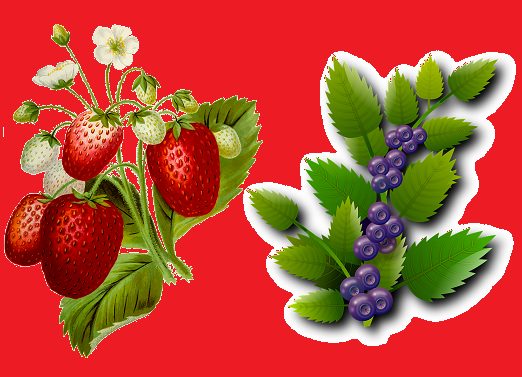
Showing posts with label gardening. Show all posts

Saturday, May 2, 2026

What is Best to Plant in May for a Bountiful Summer Harvest: Herbs (Part 3 of 3)

This is the last post in our 3-part series discussing the best vegetables, fruits, and herbs to plant during the month of May.  Hope you have enjoyed Part 1 and Part 2 of this content.

Herbs to grow in May

Art generated using the free CoPilot art tool

πŸͺπŸͺπŸͺπŸͺ

Herbs to Plant in May

Herbs adore warm weather and grow quickly, making them perfect for May planting.

BASIL

  • Harvest window: Late June onward; pinch regularly for continuous growth.

  • Mentioned in the Bible?: Basil isn’t mentioned in the Bible.

  • Traditions linked to Christianity but not commanded by Jesus or the Apostles: The association between basil and the True Cross comes primarily from the Eastern Orthodox Church, Greek Orthodox tradition, and Byzantine communities. In these traditions, a legend says that basil grew around the site where St. Helena discovered the True Cross in the 4th century.

  • Myth: In medieval Europe, basil was associated with dragons and scorpions. Some believed smelling basil would cause a scorpion to grow in your brain — a superstition that lasted centuries.

  • Legend: In India, holy basil (tulsi) is sacred and believed to be the earthly form of a goddess.


OREGANO

  • Harvest window: Mid-summer through fall.

  • Mentioned in the Bible?: Oregano is related to hyssop, a cleansing herb mentioned frequently in the Bible. In Psalm 51:7, David says, “Purge me with hyssop, and I shall be clean.”

  • Myth: Ancient Greeks believed oregano was created by Aphrodite as a symbol of joy. Newlyweds wore oregano crowns to bless their marriage.

  • Legend: It was planted on graves to bring peace to the dead.

THYME

  • Harvest window: Mid-summer onward; thrives in heat.

  • Mentioned in the Bible?: Thyme grew throughout the ancient Near East and was used for purification and incense. While not named directly, it’s often associated with the aromatic herbs used in temple rituals.

  • Myth: In medieval Europe, thyme was believed to help one see fairies. People carried thyme in pouches or planted it near gardens to attract them.

  • Legend: Roman soldiers bathed in thyme to gain courage before battle.


My #foodie posts. Thyme: The Herb of Courage: Its Use for Cooking and Medicine medium.com/foodie-luv/t... #Herbs And #Spices #Food #FoodHistory

[α΄›Κ€α΄‡α΄€α΄›ΚœΚΚŸ ꜰᴏx α΄€α΄‹α΄€ α΄„α΄α΄Ι΄α΄‡Κκœ±α΄˜Ιͺɴɴᴇʀ] πŸ’– (@cmoneyspinner.bsky.social) 2025-06-28T17:08:08.933Z


CILANTRO

  • Harvest window: Late June, but bolts quickly in heat—plant in partial shade for longer life.

  • Mentioned in the Bible?: Coriander is explicitly mentioned in Exodus 16:31, where manna is described as “white like coriander seed.” It symbolizes God’s miraculous provision.

  • Myth: Coriander seeds were found in the tomb of Tutankhamun, leading some to believe it was a sacred plant meant to accompany souls into the afterlife.

  • Legend: Ancient healers believed coriander could bring love and passion when added to wine.

History of Simple Things. “Parsley vs. Cilantro – Why They’re Always Confused [ID0914].” YouTube, 15 Jan. 2026, https://www.youtube.com/watch?v=EttVe4bCiPo.

🌿🌿🌿🌿🌿

PARSLEY

  • Harvest window: Mid-summer through frost.

  • Mentioned in the Bible?: Parsley isn’t mentioned in the Bible, but in Jewish tradition it plays a role in the Passover Seder, symbolizing new life and spring.

  • Myth: In Greek mythology, parsley sprang from the blood of Archemorus, a child whose death foretold doom. Because of this, parsley was associated with both death and victory.

  • Legend: Romans believed parsley could protect against intoxication and wore it as garlands during feasts.

https://www.tumblr.com/myfoodieluv/815547494091096064/via-how-to-grow-your-own-organic-parsley

Happy Month of May!

Final Thoughts

Planting in May gives you a garden that thrives physically and practically overflows by midsummer. With warm soil, reliable sunshine, and the full growing season ahead, your vegetables, fruits, and herbs get the best possible start. Have you been inspired? Are you dreaming of juicy tomatoes, fragrant herbs, or sweet summer melons? May is your green light month.  Thanks for reading.

(P.S. Don't feel bad if you don't have a backyard. Many of these vegetables, fruits, and herbs can be grown successfully in containers.)

MAY GARDEN

*****

REFERENCES/SOURCES:

The Bible. Authorized King James Version, Oxford UP, 1997.

Dalby, Andrew. Food in the Ancient World from A to Z. Routledge, 2003.

Davidson, Alan. The Oxford Companion to Food. Oxford UP, 2014.

Foster, Nelson. “The Three Sisters: Corn, Beans, and Squash.” Native American Food Plants: An Ethnobotanical Dictionary, edited by Daniel E. Moerman, Timber Press, 1998.

Graves, Robert. The Greek Myths. Penguin Books, 2017.

Hageneder, Fred. The Meaning of Trees: Botany, History, Healing, Lore. Chronicle Books, 2005.

Kritsky, Gene. The Tears of Re: Beekeeping in Ancient Egypt. Oxford UP, 2015.
(Referenced for Egyptian agricultural myths, including melon lore.)

Leeming, David. The Oxford Companion to World Mythology. Oxford UP, 2005.

Moerman, Daniel E. Native American Ethnobotany. Timber Press, 1998.

Nash, George. Fairy Lore: A Handbook. Reaktion Books, 2022.
(Used for thyme and fairy related folklore.)

O’Shea, Stephen. The Perfect Heresy: The Revolutionary Life and Death of the Medieval Cathars. Walker & Co., 2001.
(Referenced for medieval herb superstitions, including basil.)

Riddle, John M. Ancient and Medieval Herbal Medicine: Theory and Practice. Duke UP, 1992.

Rupp, Rebecca. How Carrots Won the Trojan War: Curious (but True) Stories of Common Vegetables. Storey Publishing, 2011.
(Used for tomato, cucumber, and bean folklore.)

Simoons, Frederick J. Plants of Life, Plants of Death. Univ. of Wisconsin Press, 1998.
(Referenced for parsley’s Greek funerary associations.)

Turner, Jack. Spice: The History of a Temptation. Vintage Books, 2005.
(Used for pepper mythology and ritual uses.)

Zohary, Daniel, et al. Domestication of Plants in the Old World. Oxford UP, 2012.
(Used for historical origins of Biblical era crops.)


What is Best to Plant in May for a Bountiful Summer Harvest: Fruits (Part 2 of 3)

Continuing from Part 1, where we discussed the best Vegetables to plant during the month of May.  Below is Part 2 of 3: Fruit.

May fruit harvest
Art generated using the free CoPilot art tool.

πŸͺπŸͺπŸͺπŸͺ

Best Fruits to Plant in May

Some fruits take longer to establish, but May is still a great time to get them started.

πŸ“Strawberries (everbearing or day-neutral)

  • Why plant in May: They settle in quickly and can produce the same year.

  • Harvest window: Mid-summer through fall for everbearing types.

  • Mentioned in the Bible?: Strawberries aren’t mentioned in the Bible, but within Catholic and Anglican traditions during the Middle Ages and Renaissance, they came to represent righteousness and spiritual purity due to their heart shape and sweetness.

  • Myth: In Native American legend, strawberries grew from the ground where the tears of a woman fell after a quarrel with her husband — the berries helped reunite them.

  • Legend: In medieval Europe, strawberries symbolized perfection and righteousness; they were carved into church altars and pillars.

πŸ‰Melons (cantaloupe, watermelon)

  • Why plant in May: They require warm soil and long growing seasons.

  • Harvest window: August through early September.

  • Mentioned in the Bible?: Melons appear in Numbers 11:5 alongside cucumbers. The Israelites remembered melons from Egypt, associating them with refreshment and abundance.

  • Myth: In ancient Egypt, melons were believed to have sprung from the tears of the god Ra.

  • Legend: Some Middle Eastern folklore claims melons were the first fruits cultivated after the Great Flood.

Raspberries & Blackberries

  • Why plant in May: Canes establish well in warm soil.

  • Harvest window: Next year, though some varieties give a small fall crop.

  • Mentioned in the Bible?: While not named directly, brambles and thorny berry bushes appear symbolically. In Judges 9:14–15, the bramble is used in a parable about leadership, representing humility and caution.

  • Myth: In Greek mythology, raspberries were originally white. They turned red when the nymph Ida pricked her finger while picking berries for baby Zeus.

  • Legend: In Celtic lore, blackberries were avoided after Samhain (late autumn) because they were believed to be claimed by mischievous spirits.


Please continue to Part 3. We will be discussing the best herbs to plant in May.

To refer back to Part 1, click here.

Friday, May 1, 2026

What is Best to Plant in May for a Bountiful Summer Harvest: Vegetables (Part 1 of 3)

May is prime planting season for warm-weather crops, and if you choose the right fruits, vegetables, and herbs, you can enjoy harvests from late June through early fall. 

  • May is a gardener’s sweet spot: warm soil, long days, and the promise of a generous summer harvest. But beyond the practical benefits, many of the fruits, vegetables, and herbs we plant today have deep roots in Biblical history, and also myths and legends.

What is Best to Plant in May for a Bountiful Summer Harvest?

Your gardener’s guide to fruits, vegetables, and herbs that thrive when planted in May.

  • May is one of the most forgiving months for gardeners. The soil has warmed, the threat of frost has passed in most regions, and long sunny days give plants exactly what they need to take off. If you’re dreaming of a lush garden and baskets of homegrown produce later in the season, May is your moment.

Food Ways will share a 3-part curated list of the best fruits, vegetables, and herbs to plant in May. 

Below is Part 1 of 3: Vegetables.

May harvest of vegetables
Image generated with free AI-art tool.

πŸͺπŸͺπŸͺπŸͺ

Best Vegetables to Plant in May

Warm-season vegetables love the rising temperatures and longer daylight hours. These crops thrive when planted now:

πŸ… Tomatoes

  • Why plant in May: They need warm soil and warm nights.

  • Harvest window: Late July through September, depending on the variety.

  • Mentioned in the Bible?: Tomatoes are not mentioned in the Bible — they originated in the Americas. Their absence is a reminder of how much agriculture expanded after Biblical times. Many gardeners enjoy noting which foods are “Old World” and which arrived later.

  • Myth: In 18th-century Europe, tomatoes were called “love apples” (pomme d’amour). People believed they had aphrodisiac powers because of their bright red color and heart-like shape.

  • Legend: Some Europeans feared tomatoes were poisonous because aristocrats who ate them on pewter plates sometimes got sick — the plates, not the tomatoes, were the culprit.

πŸ«‘πŸŒΆ️Peppers (bell, sweet, hot)

  • Why plant in May: They’re heat lovers and slow starters, so May gives them a strong runway.

  • Harvest window: Late July through October.

  • Mentioned in the Bible?: Like tomatoes, peppers are New World crops. Their modern popularity contrasts with the spice blends of the ancient Near East, which relied on herbs rather than peppers for heat.

  • Myth: In parts of Central and South America, peppers were believed to ward off evil spirits. Hanging chili peppers near doorways was thought to protect the home from harm.

  • Legend: The Aztecs used peppers in rituals to invoke rain and fertility.

πŸ₯’Cucumbers

  • Why plant in May: They germinate quickly in warm soil.

  • Harvest window: Late June through August.

  • Mentioned in the Bible?: Cucumbers are mentioned in Scripture. In Numbers 11:5, the Israelites remember eating cucumbers freely in Egypt. They symbolize longing for comfort and abundance during hardship.

  • Myth: Ancient Romans believed cucumbers could cure everything from poor eyesight to scorpion bites. Emperor Tiberius supposedly demanded cucumbers year-round, leading to the invention of early greenhouse technology.

  • Legend: In some Slavic traditions, cucumbers were considered sacred and were used in fertility rituals.


Squash & Zucchini (Gourds)

  • Why plant in May: These vigorous growers explode with warm weather.

  • Harvest window: Early July through September.

  • Mentioned in the Bible?: Squash is another New World plant. However, gourds — a related plant — appear in the Bible. In Jonah 4:6, God provides a gourd plant to shade Jonah, symbolizing divine compassion.

  • Myth: In Native American folklore, squash is one of the “Three Sisters” — corn, beans, and squash — three crops that grow best together and symbolize cooperation and harmony.

  • Legend: Some tribes believed squash seeds were gifts from the gods to ensure survival.

Green Beans (bush or pole)

  • Why plant in May: They sprout fast and love heat.

  • Harvest window: Late June through August.

  • Mentioned in the Bible?: Beans appear in Ezekiel 4:9, where God instructs Ezekiel to make bread from wheat, barley, beans, lentils, millet, and spelt. Beans represent sustenance during difficult times.

  • Myth: In ancient Greece, beans were associated with the dead. Pythagoras forbade his followers from eating them, believing beans contained the souls of the departed.

  • Legend: In some cultures, beans were thought to bring good luck when planted on certain days of the lunar cycle.

Corn (maize)

  • Why plant in May: Needs warm soil to germinate and plenty of sun.

  • Harvest window: Late July through September.

  • Mentioned in the Bible?: “Corn” in the King James Bible refers to grain like wheat or barley, not maize. True corn (maize) is a New World crop. Still, planting it today echoes the Biblical theme of grain as a symbol of provision and blessing.

  • Myth: In many Native American traditions, corn is a sacred gift from the Corn Mother, a goddess who sacrificed herself so her people could survive.

  • Legend: The Cherokee tell of Selu, the First Woman, whose body produced corn to feed her children.


Please continue to Part 2. We will be discussing the best fruits to plant in May.

Sunday, April 12, 2026

Strawberries or Blueberries? Pineberry or Pink Lemonade? Let’s Decide

Life is full of difficult decisions.  Especially when it comes to gardening choices.  Tomatoes or peppers?  Herbs or flowers?  Raised beds or containers? 'But choosing between berries? YUM! What a delicious dilemma. πŸ“πŸ«

As if it isn't hard enough to choose between growing strawberries or blueberries. Would you believe there are these two exquisitely delicious variations of these fruits, and you have to choose?  (Or not. 😊)

White Carolina Pineberry Plant VS 
Pink Lemonade Blueberry Plant.

Let's Discuss and Decide.


πŸ“White Carolina Pineberry Plant

If you are a gardener and you like strawberries, then you might like to try planting the White Carolina Pineberry plant. It tastes like pineapple and strawberry TOGETHER! If you can imagine that.

A pineberry looks like a strawberry that forgot to blush — white flesh, red seeds, and a flavor often described as strawberry meets pineapple. Some say exotic, some say unusual, and some people describe it as weird. But nobody ever calls it boring.

PROs:

  • Works anywhere a regular strawberry works — including dipped in chocolate.

  • A berry that tastes like pineapple and strawberry? Showing off? That's right!

  • Your garden instantly becomes a conversation piece.

  • Featured by natural health enthusiasts as a nutrient-rich fruit. (Natural Medicine)

  • A fun gift for gardeners who like trying unusual plants.


CONs:

  • If you believe all strawberries should be red, this one will challenge your worldview.

  • Pineberries can be a little fussier than standard strawberries, so it's not for beginners.   

Pineberry plant
Fumikas Sagisavas, CC0, via Wikimedia Commons

🫐 Pink Lemonade Blueberry Plant

Do you like lemonade? I do. What I like about lemonade is that you can vary the recipe and make it even better by adding another fruit. Do you like blueberries? Well then, there is no reason why you wouldn’t love the Pink Lemonade Blueberry plant. The berries ripen to a rosy pink and taste sweet-tart, like a blueberry with a citrus wink.

PROs:
  • For people who always wanted blueberries to be PINK
  • Surprisingly beginner-friendly — perfect for newbie gardeners.   
  • People might be impressed if they saw them in your garden
  • Works in all your blueberry recipes (including blueberry pancakes)  
 
CONs:
  • Any fruit claiming to be a blueberry “relative” should be BLUE.  (O.o)  What?  It's not blue!!
Stark Bro's. “Pink Lemonade Blueberry - Check Out This Popular Plant.” YouTube, 23 Mar. 2023, https://www.youtube.com/watch?v=YwV9ituZoMU&t=5s.


* Want to learn more? Specialty Produce is a huge online resource for fruits, vegetables, and rare edible plants. Their site offers detailed profiles—flavor, history, seasonality, and storage tips—making it a favorite for gardeners, chefs, and anyone who loves discovering unique ingredients.


♦  White Carolina Pineberry Plant


♦  Pink Lemonade Blueberry Plant


Monday, January 3, 2022

A Large Order of Jupiter Fries, Please!

Have been reading about the possibility of growing vegetables on other planets? Saw a preview of that movie which starred Matt Damon, “The Martian” (2015), where he was growing stuff in a place where nothing grows. I dismissed the notion because it was a science fiction movie. I mean … it's “fiction”. Not science.  :)

However, there are some scientists who are serious about pursuing this endeavor. Researchers want to and have been experimenting with plants growing in soil similar to kind of dirt one would find on Mars or Jupiter, for example.


*
As a non-scientist, I would not completely write off farming on Mars or Jupiter as an impossibility.  But I will say the scientists were very smart in choosing the potato as the test crop.  As my late non-scientist sister with a green thumb once told me: "If you can't grow a potato, you can't grow anything."  :)
According to a 2012 BBC News report, food futurologists are looking into the kind of food we may be eating in 20 years.  But they are only researching food available here on earth like insects, algae, lab-grown meat, and sonic-enhanced food (???).
Who knows? Fries from Jupiter might be quite tasty. :) But I bet they'll be expensive.  :)

* * *
References:
Flook, Jamie. "Could Foods Taste Better On Other Planets Than They Do On Earth?" Popular Science. A Bonnier Corporation Company, 22 Sept. 2015. Web. 8 Feb. 2017. ( http://www.popsci.com/could-food-taste-better-other-planets ).
Schneibel, Andrea. "SPACE: Scientists Try to Grow Peruvian Potatoes on "Mars"." Scientific American. A Division of Nature America, Inc., 2 Feb. 2016. Web. 8 Feb. 2017. ( https://www.scientificamerican.com/article/scientists-try-to-grow-peruvian-potatoes-on-mars/ ).
Jean-Louis, Lawrence. "Life on Mars? For Potatoes Maybe…." Cook, Mix, Mingle. N.p., 3 Feb. 2016. Web. 8 Feb. 2017. ( http://web.archive.org/web/20161118063714/http://www.cookmixmingle.com/food-recipes/growing-potatoes-on-mars/ ).
Winterman, Denise. "Future Foods: What Will We Be Eating in 20 Years' Time?" BBC News Magazine. BBC News Services, 30 July 2012. Web. 08 Feb. 2017. ( http://www.bbc.com/news/magazine-18813075 ).
♦ ♦ ♦


♦ Blog Sponsors